


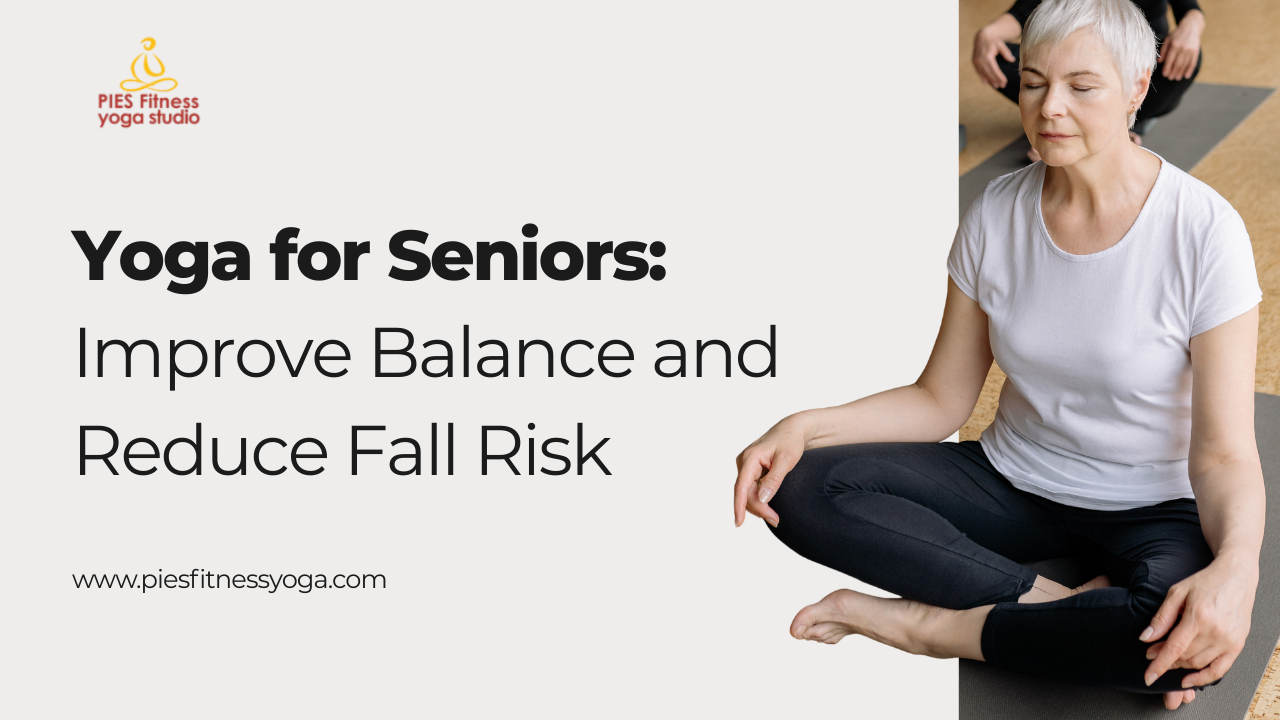
Yoga for Seniors: Improve Balance and Reduce Fall Risk
Falls are one of the most common causes of injury among older adults, but balance decline is not inevitable. Stability is a skill that can be trained. Yoga offers a structured, low-impact way to strengthen the muscles that keep you upright, sharpen coordination, and improve body awareness — all essential for fall prevention.
Let’s explore why balance changes with age, how yoga supports stability, and how to build a safe and sustainable routine.
Why Fall Prevention Matters With Age
Balance relies on muscle strength, joint mobility, vision, inner ear function, and the nervous system’s ability to respond quickly. With age, muscle mass naturally decreases, reaction time slows, and ankle and hip mobility may become limited.
These changes affect how efficiently the body corrects small stumbles or uneven surfaces.
The Real Impact of Falls on Independence and Confidence
A fall does more than cause physical injury. It often creates hesitation and fear. Many older adults begin limiting movement after a fall, avoiding stairs, outdoor walks, or unfamiliar environments. Reduced movement then accelerates muscle loss, creating a cycle that increases future fall risk.
Preventative balance training protects both physical ability and confidence.
How Strength, Flexibility, and Proprioception Work Together
Balance is about the coordination of multiple systems working together:
- Strength in the legs and core to maintain an upright posture
- Flexibility in the hips and ankles to adjust to uneven surfaces
- Proprioception to sense body position
- Neurological coordination to respond quickly
Yoga integrates all of these in one practice.
How Yoga Improves Stability and Reduces Fall Risk
Strengthening the Muscles That Keep You Upright
Many yoga poses challenge the hips, thighs, calves, and deep core muscles. These are the primary stabilizers that prevent loss of balance. Slow transitions between poses also strengthen smaller stabilizing muscles that traditional exercises often overlook.
Improving Posture and Body Alignment
Poor posture shifts the body’s center of gravity forward. Yoga retrains neutral spine alignment and even weight distribution through the feet. Improved alignment reduces unnecessary strain and improves mechanical stability.
Enhancing Proprioception and Body Awareness
Single-leg poses and slow weight shifts stimulate joint receptors in the ankles, knees, and hips. Over time, this increases the body’s awareness of subtle movement changes, allowing quicker correction before a fall occurs.
Training the Nervous System Through Mindful Movement
Yoga emphasizes slow, controlled breathing paired with deliberate movement. This strengthens the connection between the brain and muscles. When balance is challenged, the nervous system becomes more efficient at responding calmly rather than reactively.
Essential Yoga Balance Poses for Seniors (With Modifications)
These poses focus on stability, lower body strength, and coordination. Always practice near a wall or sturdy chair if needed.
Tree Pose (Vrksasana)
Tree Pose builds single-leg strength and ankle stability.
- Stand tall with feet hip-width apart.
- Shift weight into one foot.
- Place the opposite foot against the inner calf or ankle (avoid the knee).
- Keep hands at the chest or lightly touch a wall.
- Hold for 10–20 seconds, then switch sides.
Modification: Keep the toes of the lifted foot lightly on the floor for added support.
Chair Pose (Utkatasana)
Chair Pose strengthens the thighs and glutes, which are critical for stability.
- Stand with feet hip-width apart.
- Bend knees as if sitting back into a chair.
- Keep chest lifted and weight in heels.
- Hold for several breaths before rising slowly.
Modification: Use an actual chair behind you for safety.
Warrior III (Virabhadrasana III)
This pose improves coordination, hip stability, and core control.
- Stand facing a wall for support.
- Shift weight into one foot.
- Hinge forward at the hips while extending the opposite leg back.
- Keep hips level and spine long.
Modification: Keep fingertips on a chair or wall.
Mountain Pose Variations
Mountain Pose may look simple, but it trains postural awareness.
Practice:
- Standing with feet evenly grounded
- Gently shifting weight forward and backward
- Lifting heels briefly to activate calves
These subtle adjustments improve balance control.
Heel-to-Toe Walk
This simple drill mimics balance testing used in clinical settings.
- Walk forward in a straight line
- Place the heel of one foot directly in front of the toes of the other
- Move slowly and steadily
Use a hallway wall for support if needed.
Safe Yoga Practice for Fall Prevention
Yoga should challenge balance without creating instability. Shorter hold times, smaller ranges of motion, and seated variations are appropriate starting points, then progress gradually.
Using Walls, Chairs, and Blocks
Support tools increase safety without reducing effectiveness. Practicing near a wall allows you to challenge balance while maintaining confidence.
Common Mistakes That Increase Fall Risk
- Moving too quickly between poses
- Locking the knees
- Holding the breath
- Practicing without nearby support
Slow transitions are just as important as the poses themselves.
When to Consult a Healthcare Professional
If there is a history of recent falls, dizziness, severe arthritis, or neurological conditions, consult a healthcare provider before beginning a new routine.
Evidence Supporting Yoga for Fall Prevention
Research examining balance training in older adults has found that structured movement programs improve single-leg stability, reaction time, and lower-body strength. Yoga, in particular, has been shown to enhance functional balance and reduce fear of falling in older populations.
Compared to isolated strength exercises, yoga integrates breath control, coordination, and posture training, making it a comprehensive approach rather than a single-focus intervention.
While yoga is not a substitute for medical care, it is a practical addition to a fall prevention strategy.
Building a Sustainable Fall Prevention Routine
Consistency matters more than intensity. Small, frequent practice produces meaningful improvements.
A simple weekly structure might include:
- 2–3 sessions per week of balance-focused yoga (15–30 minutes)
- Daily posture awareness practice while standing or walking
- Regular walking to maintain cardiovascular health
- Light strength training for hips and legs
Improvements are often noticeable within several weeks when practice is steady.
Final Thoughts
Balance is not fixed. It responds to training at any age. Yoga strengthens the muscles that stabilize you, sharpens body awareness, and improves nervous system coordination — all critical for preventing falls.
Starting gently, using proper support, and practicing consistently can help maintain independence, mobility, and confidence for years to come.
Our beginner yoga and senior yoga classes are tailored to support you, no matter your age or fitness level. Build strength, improve flexibility, and move at a pace that feels right for your body this summer. Join us at PIES Fitness Yoga Studio, located at 1322 Prince Street, Alexandria, VA 22314. For more information, call 703-887-9574 or email piesyoga.info@gmail.com.