


Gentle Yoga vs Yoga Therapy: What’s the Difference?
Gentle yoga and yoga therapy are both rooted in the idea of using movement, breath, and awareness to support overall well-being. As more people look for slower and more supportive forms of yoga, these two approaches have become increasingly popular among beginners, older adults, and individuals seeking a more mindful connection with their bodies.
While they are often mentioned together in wellness conversations, each practice is designed with a different experience in mind. Some people turn to yoga as a way to manage everyday stress and stay active, while others seek more structured support for physical discomfort, recovery, or emotional balance.
Why Gentle Yoga and Yoga Therapy Are Often Confused (and Why It Matters)
Yoga is often presented as a single practice, yet it’s a wide spectrum of approaches designed for very different needs. Among the most commonly misunderstood are gentle yoga and yoga therapy.
Gentle yoga and yoga therapy share similar qualities, like slow movement, mindful breathing, and a calm, comfort-focused yoga practice. To a beginner, gentle yoga classes and yoga therapy sessions can easily look and feel like gentle, supportive yoga.
The confusion often comes from wellness language. Terms such as “gentle yoga,” “restorative yoga,” “healing yoga,” and “yoga therapy” are often used loosely in everyday use.
What Is Gentle Yoga?
Gentle yoga is a slow and accessible style of yoga that focuses on comfort, awareness, and ease of movement. It is designed for people who want the benefits of yoga without intensity or strain. This allows you to feel each movement rather than rush through it.
It helps people reconnect with their bodies in a calm and supportive way, making it popular in beginner classes, community settings, and online sessions.
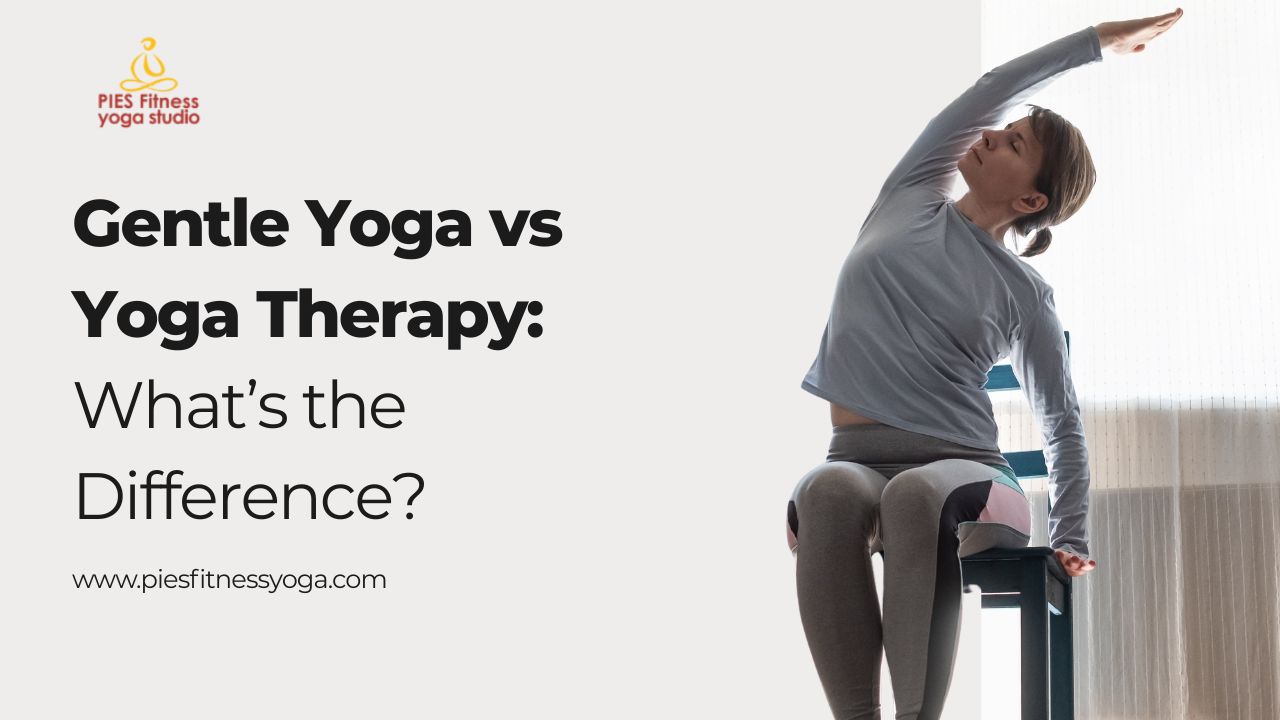
Classes often include seated stretches, supported standing poses, and modifications using props like blocks or cushions. A typical class starts with grounding and breathing, followed by slow movements, and ends with relaxation, where everyone is encouraged to adjust movements based on comfort.
The goal of gentle yoga is general well-being—reducing stress, improving mobility, and increasing body awareness. Benefits develop gradually with consistency.
The focus is always on creating calm, not intensity.
What Is Yoga Therapy?
It is a personalized approach that uses yoga tools to support specific physical, emotional, or psychological needs.
Unlike group classes, it is tailored to the individual, with each session designed based on a person’s condition or goals and adjusted in real time, whether that involves injury recovery, chronic pain, or emotional support.
It’s more about ongoing support and healing, where everything is adjusted in real time based on comfort and need.
A certified yoga therapist has specialized training in anatomy and therapeutic applications of yoga works alongside medical professionals to guide safely, adapt practices, and support wellbeing.
Gentle Yoga vs Yoga Therapy: The Key Differences
| Area | Gentle Yoga | Yoga Therapy |
|---|---|---|
| Purpose and Focus | Gentle yoga is centered on relaxation, stress relief, and maintaining everyday mobility. The focus is broad, making it suitable for general wellness and daily balance. | Yoga therapy is more targeted and intentional. It supports specific challenges such as chronic pain, injury recovery, or emotional stress. Instead of a general flow, the practice adapts to the individual’s needs. |
| Group vs Personalized Sessions | Gentle yoga is usually practiced in group settings where participants follow the same class structure with small modifications when needed. | Yoga therapy is typically one-on-one or done in very small groups, allowing sessions to be fully customized to the individual. |
| Wellness vs Therapeutic Care | Gentle yoga supports overall wellbeing, stress management, flexibility, and preventative self-care. | Yoga therapy focuses on healing, recovery, rehabilitation, and condition-specific support through personalized guidance. |
Benefits of Both Gentle Yoga and Yoga Therapy
Many people benefit from both gentle yoga and yoga therapy because the two approaches complement each other well. The latter offers more personalized support for specific physical or emotional challenges, while gentle yoga can become part of a regular wellness routine.
Gentle Yoga
Gentle yoga supports long-term wellness through slow, mindful movement focused on relaxation, flexibility, and stress reduction. It is easy to maintain as part of daily life and works well for people looking for consistent movement without physical strain.
Some of the key benefits of gentle yoga include:
- Supporting relaxation and stress relief
- Improving flexibility and mobility
- Encouraging better balance and posture
- Creating a sustainable daily wellness routine
- Promoting overall physical and mental well-being
Because the focus is broad and preventative, gentle yoga is ideal for maintaining everyday wellness and creating a steady self-care practice over time.
Yoga Therapy
Yoga therapy provides targeted support through a personalized approach tailored to specific physical, emotional, or psychological needs. Each session helps the individual make the practice more intentional and therapeutic.
Yoga therapy may help with:
- Chronic pain management
- Injury recovery and rehabilitation
- Emotional well-being and stress regulation
- Breathwork and nervous system support
- Complementing medical or rehabilitation treatments
Unlike general yoga classes, yoga therapy focuses on healing, recovery, and condition-specific care. The goal is not simply movement, but creating practices that directly support the individual’s health and wellbeing.
Whether you choose gentle yoga or yoga therapy, the most important step is simply beginning. Both practices offer support—you just need to find the one that fits where you are right now.
At PIES Fitness Yoga Studio, we make yoga accessible to everyone. We have over 30 classes on our weekly schedule that are appropriate for seniors.
Enjoy the best of Alexandria yoga. Our studio is located at 1322 Prince Street, Alexandria, VA 22314. You can contact us by phone at 703-887-9574 or email us at piesyoga.info@gmail.com.